Cyber Threat: スプーフィング攻撃

スプーフィング攻撃とは?

Spoofing attacks occur when cybercriminals impersonate trusted sources, like familiar companies, websites or individuals. The main goal is to trick you into sharing passwords, credit card details or other Personally Identifiable Information (PII).

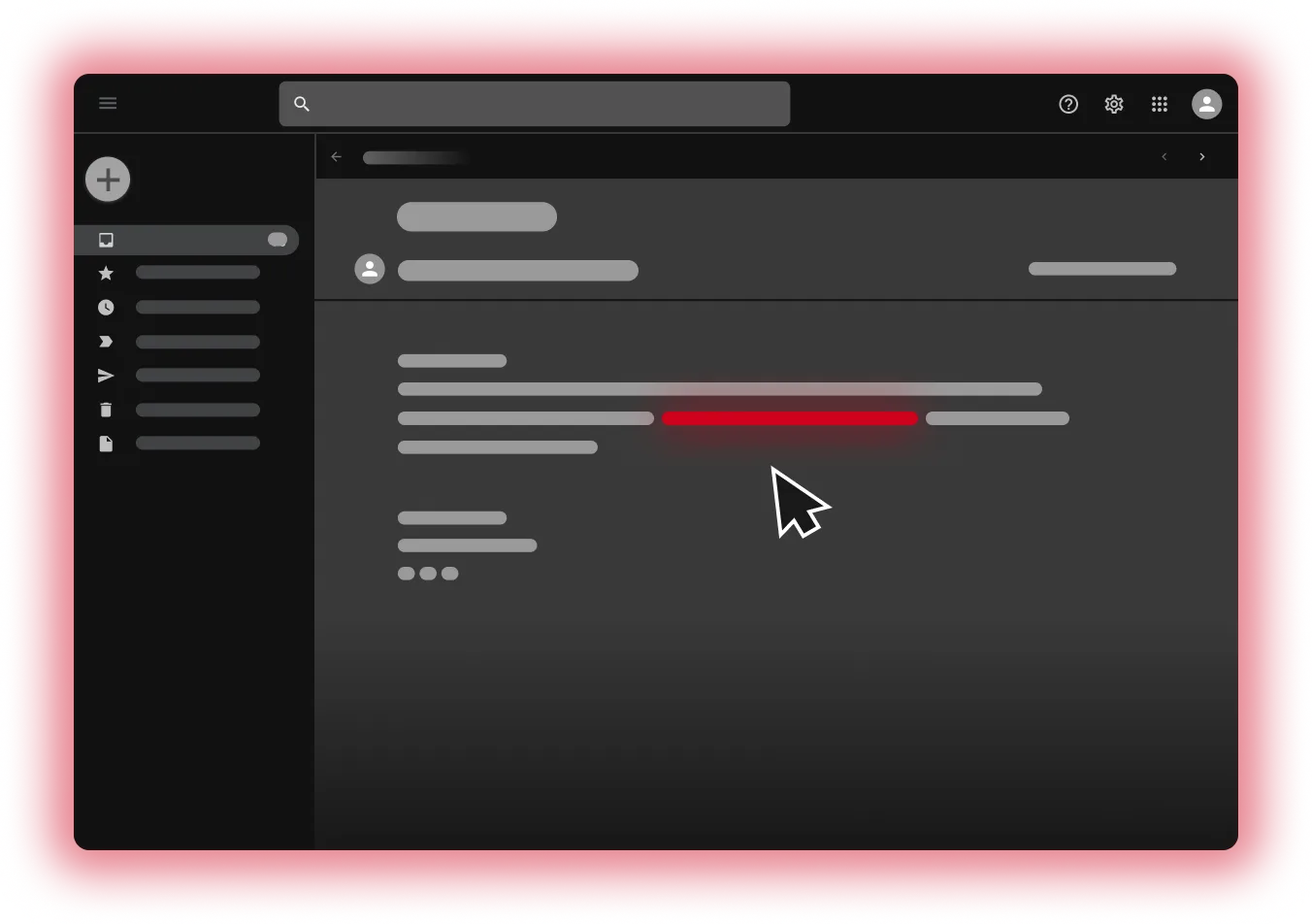
Dark-themed email interface with a highlighted suspicious link and a cursor hovering over it, representing a spoofing attack. The visual illustrates how cybercriminals impersonate trusted sources to deceive users into clicking malicious links or revealing sensitive information.

Five common types of spoofing attacks

Email spoofing

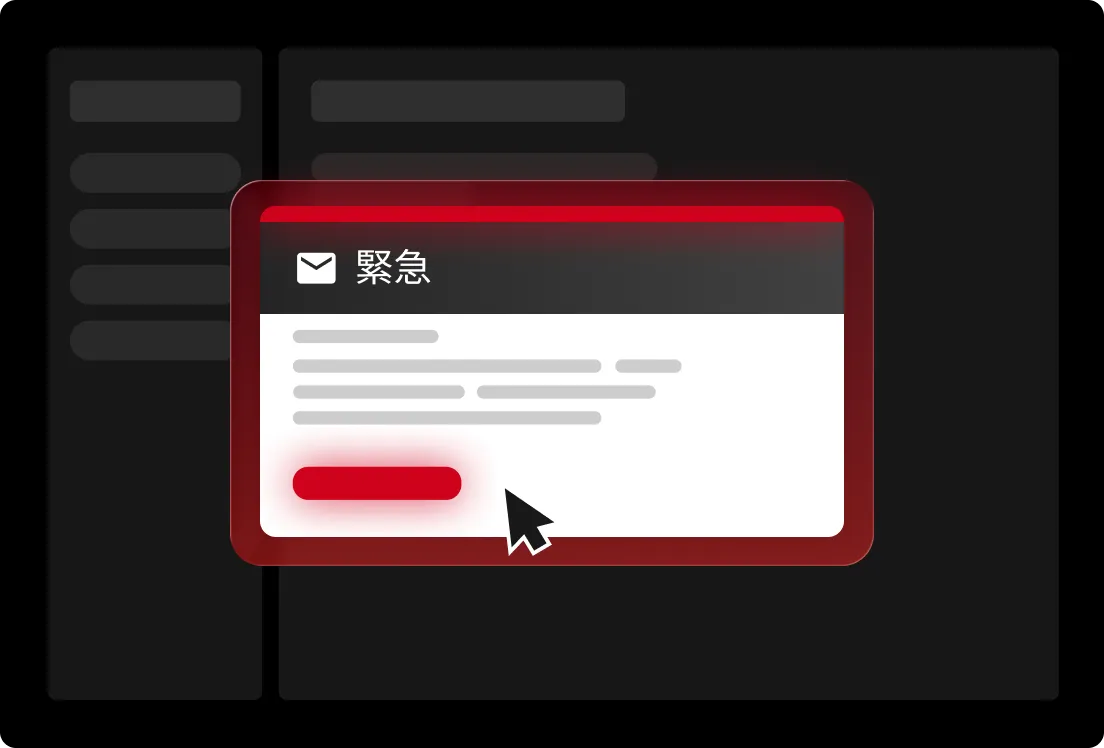
Some cybercriminals forge the sender's email address to make it appear as if it's from a trusted source, such as a bank or healthcare company. Once they adjust the sender's domain, cybercriminals will trick victims into sharing their credentials or downloading malware via malicious links.

Illustration of a computer screen displaying a suspicious email popup marked 'URGENT', with a cursor hovering over a red button. The visual symbolizes email spoofing, where attackers impersonate trusted senders to trick users into clicking malicious links or taking harmful actions.

ウェブサイトのなりすまし

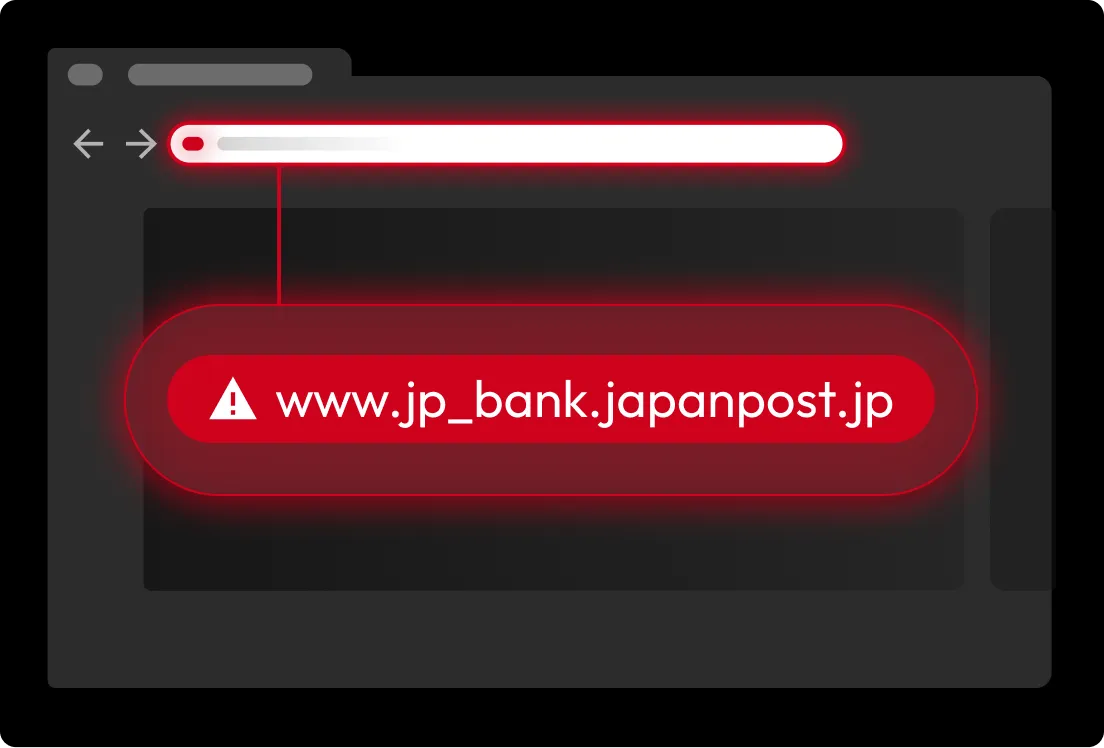
Cybercriminals create fake websites that mimic legitimate ones to collect your login credentials. These pages have nearly identical logos, color schemes and layouts, making them difficult to distinguish from legitimate sites at first glance.

Graphic of a browser window with a highlighted and glowing red URL bar displaying a deceptive web address, 'www.bankofamirica.com.' A warning icon indicates a spoofed website designed to imitate a legitimate one, commonly used in phishing and fraud attacks.

IP スプーフィング

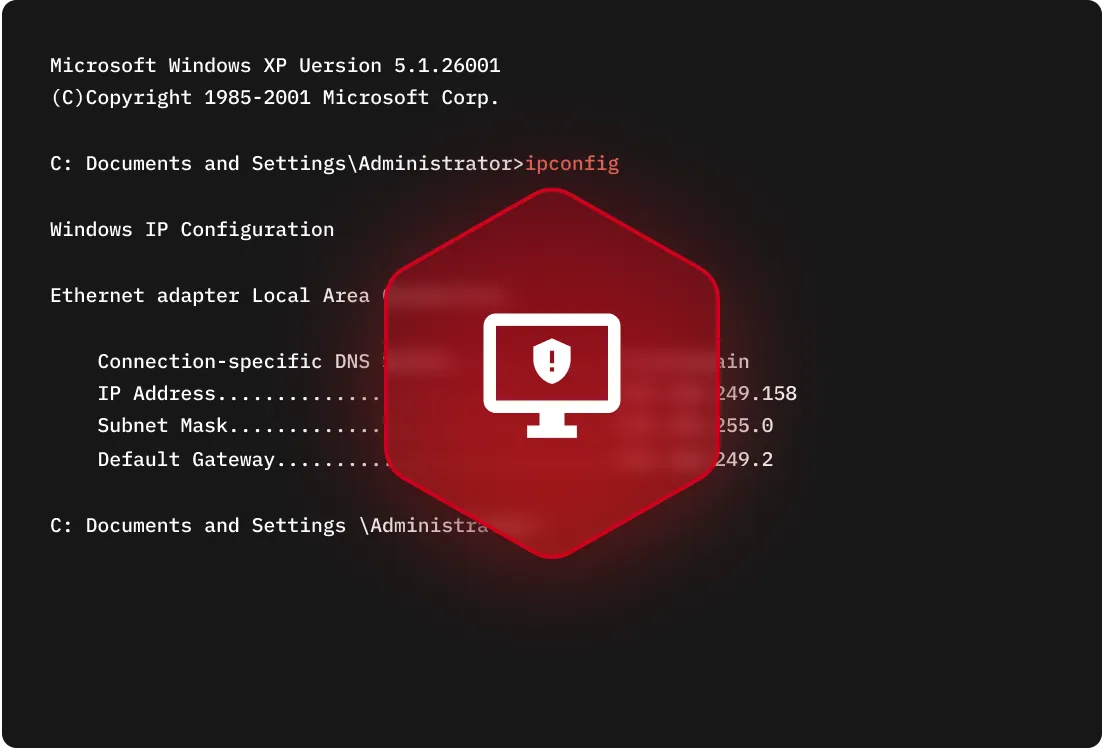
With Internet Protocol (IP) spoofing, cybercriminals disguise themselves by changing their IP address to impersonate another device or network. This cyber attack is often used during Distributed Denial-of-Service (DDoS) attacks to flood systems and conceal the cybercriminal's identity.

Illustration of a command prompt window showing IP configuration details on a Windows system, with a red warning icon overlaid on a computer symbol. The image represents IP spoofing, where attackers disguise their IP address to impersonate a trusted source or bypass network defenses.

Call spoofing

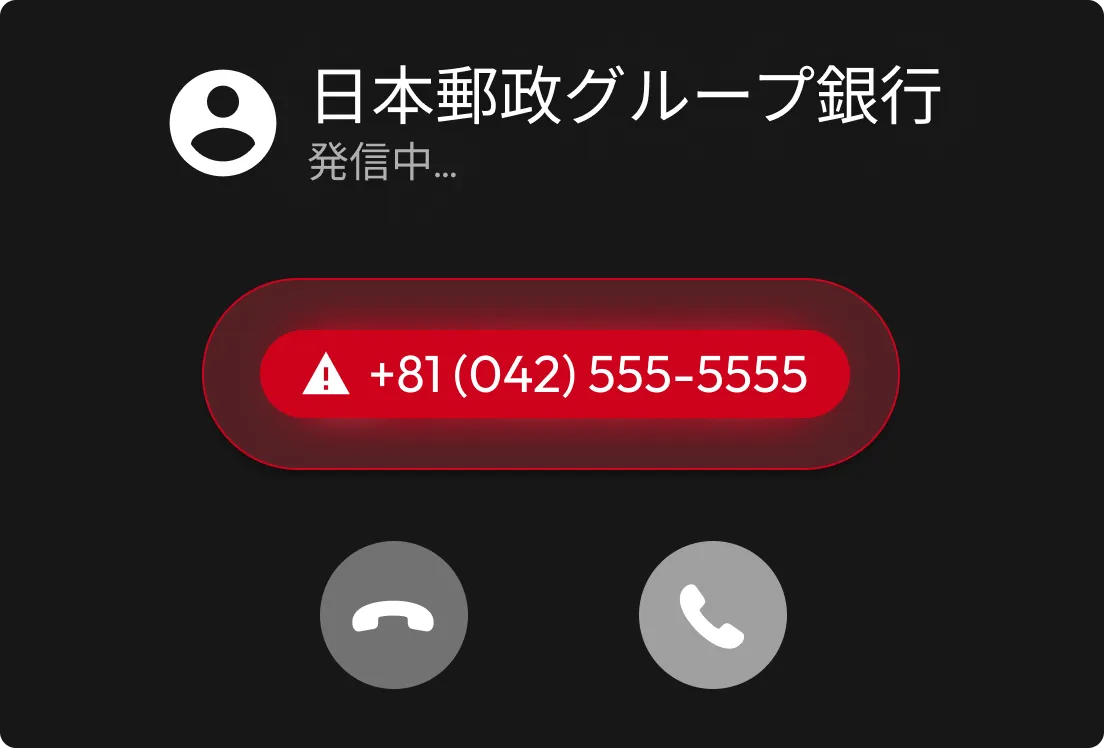
Also known as caller ID spoofing, this method allows cybercriminals to manipulate the phone number displayed on your phone to impersonate a trusted source, such as a financial or government agency. Cybercriminals aim to trick you into sharing sensitive information, including credit card details or One-Time Passwords (OTPs) over the phone.

Mobile call screen mockup showing an incoming call labeled 'Bank of America' with a red warning icon and a spoofed phone number. The image represents call spoofing, where attackers falsify caller ID information to impersonate trusted organizations and deceive recipients.

SMS spoofing

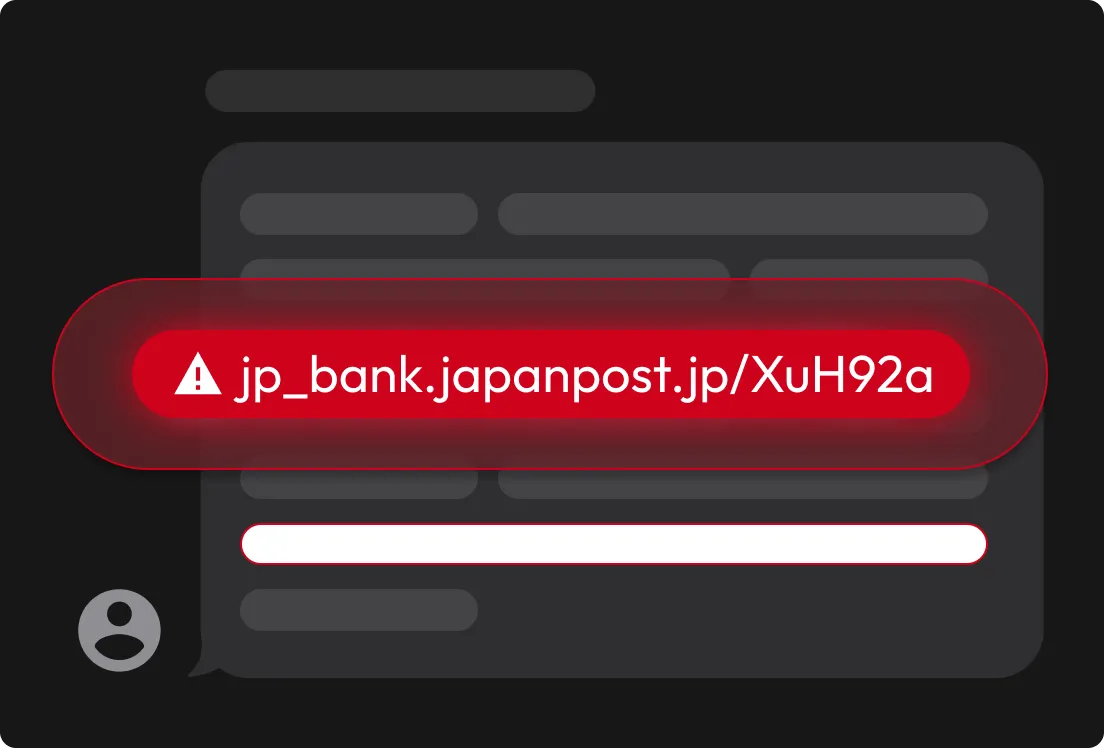
Known as smishing, cybercriminals send text messages that appear to come from legitimate businesses' phone numbers. These messages use urgent language, requesting that you click a link, verify your account information or share security codes.

Illustration of a text message interface with a glowing red alert containing a deceptive URL, 'bankofamirica.com/XuH92a.' A warning icon highlights the threat of SMS spoofing, where attackers impersonate trusted senders to deliver fraudulent links via text message.

How do spoofing attacks work?

To appear legitimate, cybercriminals manipulate email addresses, phone numbers, IP addresses or website URLs. Once trust is established, they will prompt you to click a malicious link, download an infected attachment or enter your credentials directly on a spoofed login page. Spoofing attacks are designed to steal your sensitive information, commit financial fraud or compromise your critical accounts.

Signs of spoofing

Urgent language

Urgent language

Messages that urge you to act immediately are classic signs of spoofing attacks. Cybercriminals want you to panic before taking time to think, sending messages like “Your account will be suspended!” or “Verify your password now!”

Suspicious URL or domain

Suspicious URL or domain

Fake websites use slightly altered domain names to deceive unsuspecting victims into entering their login credentials.

Unusual wording and tone

Unusual wording and tone

While poor spelling and grammar were once clear signs of spoofing, cybercriminals now use AI to create believable messages. Instead of focusing only on grammatical errors, look for unusual phrasing or wording that differs from the organization's official branding.

How to defend against spoofing attacks

パスワードマネージャーを利用する

Password managers reduce spoofing risks by autofilling login credentials only on websites that match saved URLs in your vault. This makes it very difficult to accidentally enter your credentials on a spoofed site.

Enable MFA on all accounts

Multi-Factor Authentication (MFA) adds stronger protection to your accounts by requiring additional verification steps. With MFA enabled, it's nearly impossible for cybercriminals to access your account, even if they know your password.

Never click on unsolicited links

Avoid clicking links or downloading attachments from unknown senders. Always verify the sender before interacting with the message in any way.

Don't share personal information

Legitimate organizations will never demand sensitive data via email, text or call. If you're unsure whether a request is real, contact the company directly using its official website.

How Keeper® protects you from spoofing attacks

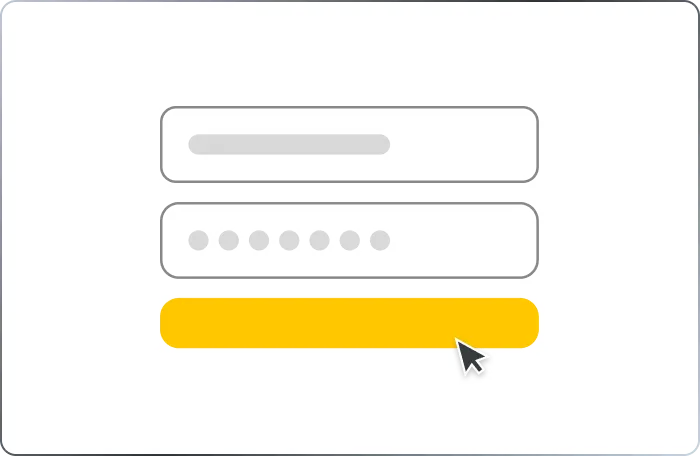
Illustration of a login form with username and masked password fields, and a yellow login button with a cursor hovering over it. The image represents KeeperFill, Keeper's autofill feature for securely entering credentials into websites and applications.

Autofills only exact URL matches

KeeperFill will only autofill credentials on websites that exactly match the URL saved in your vault. This feature prevents login attempts on spoofed websites.

Illustration of a strong, auto-generated password containing a mix of uppercase, lowercase, numbers, and special characters. A green strength meter and shield icon labeled 'Strong' indicate high password security, representing a password generator tool.

Enforces strong, unique passwords

If you fall for a spoofing attack, having strong, unique passwords in your Keeper Vault can help prevent password reuse and account compromise across multiple platforms.

BreachWatch dashboard widget showing a red semicircle gauge and the number 2, indicating two records at risk. The visual represents Keeper's BreachWatch feature, which monitors the dark web for exposed credentials linked to a user's vault.

Monitors the dark web

BreachWatch® notifies you in real time with dark web alerts if any of your credentials appear in a public breach, allowing you to act before cybercriminals can use your data.

Protect yourself from spoofing attacks with Keeper

今すぐ購入