Remote Database Access
Secure remote database access with KeeperPAM®
KeeperPAM delivers secure remote database access through a cloud-native, zero-knowledge and zero-trust architecture.

Keeper Security Recognized in PAM Magic Quadrant™ and as Second Fastest Growing Security Company Globally
Learn MoreKeeperPAM delivers secure remote database access through a cloud-native, zero-knowledge and zero-trust architecture.
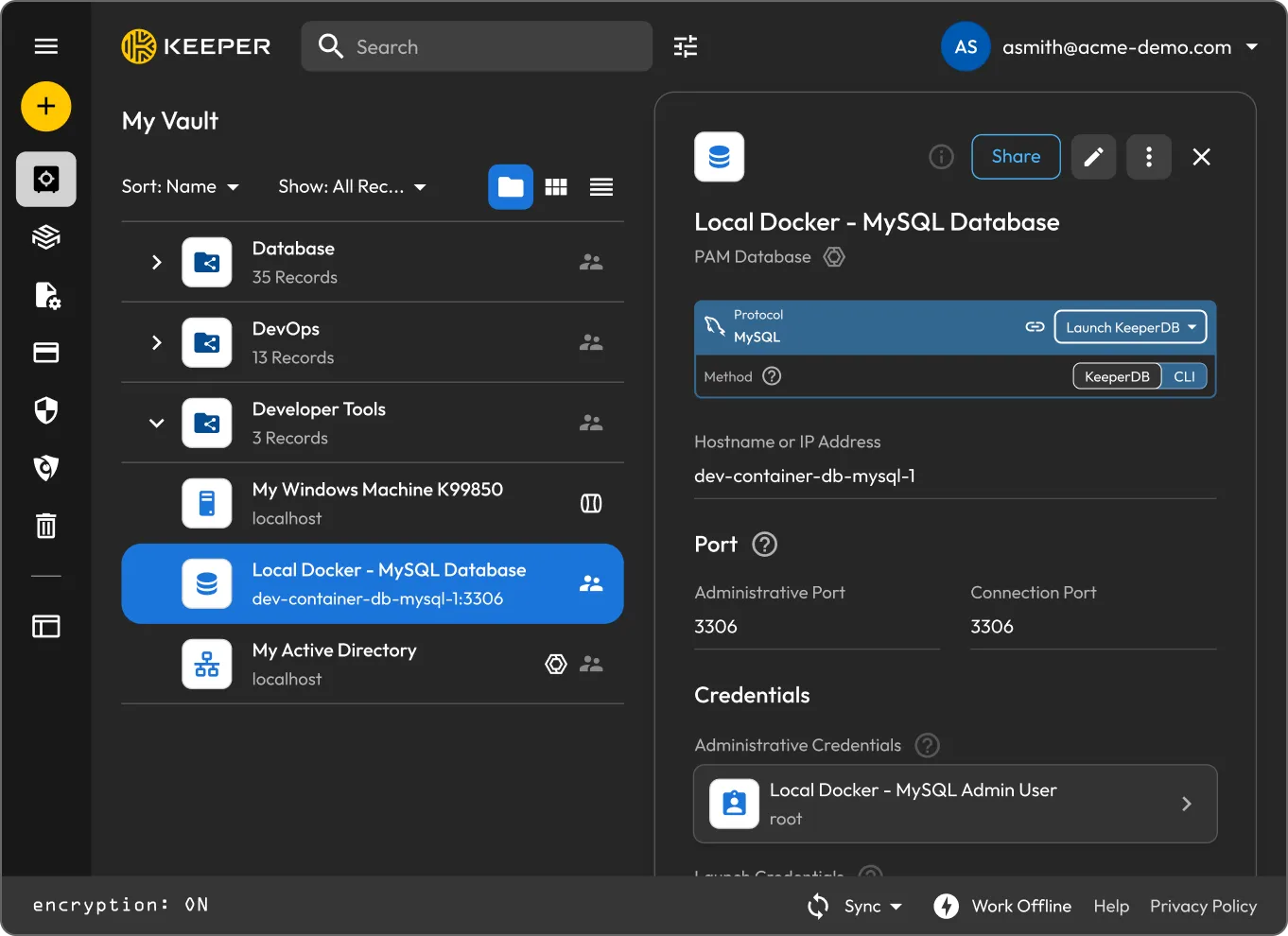

Exposed credentials expand the attack surface

VPN dependencies create operational and security gaps

Complex permission management weakens policy enforcement

Limited visibility into remote database activity

Regulatory compliance becomes harder to maintain
KeeperPAM delivers just-in-time access to privileged users directly from the Keeper Vault using zero-knowledge encryption. Credentials are never exposed to end users, stored on endpoints or embedded in configuration files. During a session, Keeper securely authenticates the database session via the Keeper Gateway, ensuring that sensitive database passwords and keys remain fully protected.
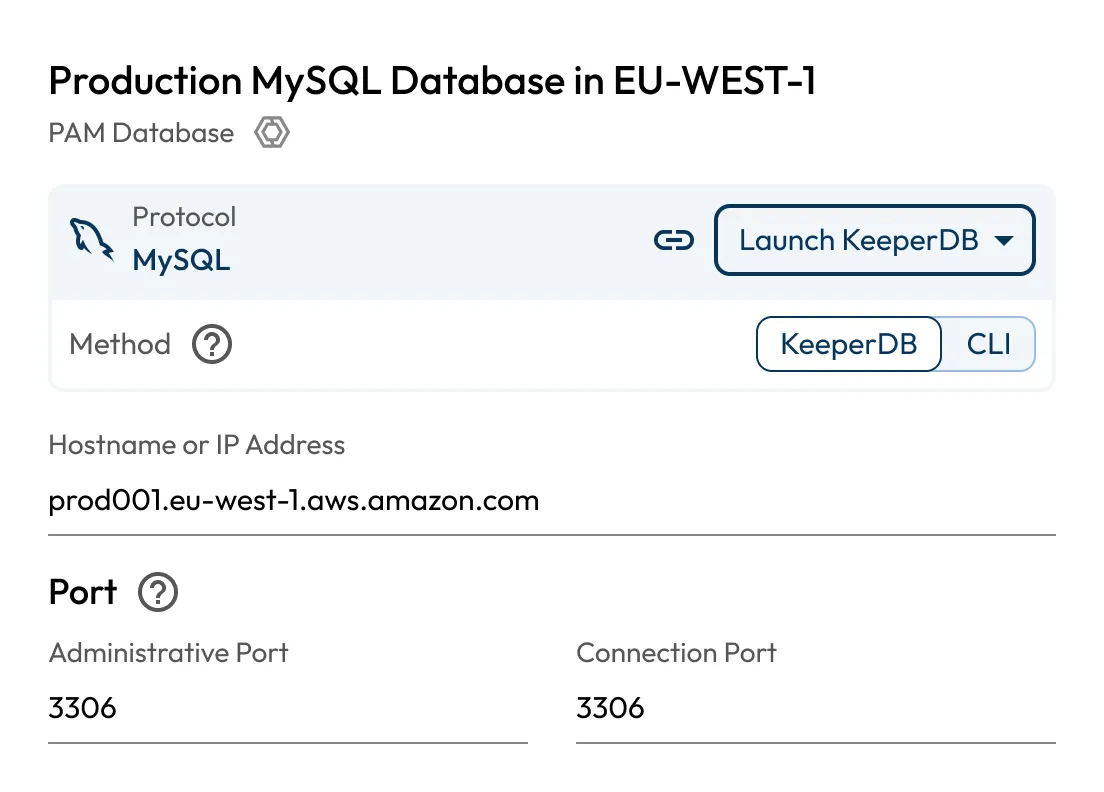
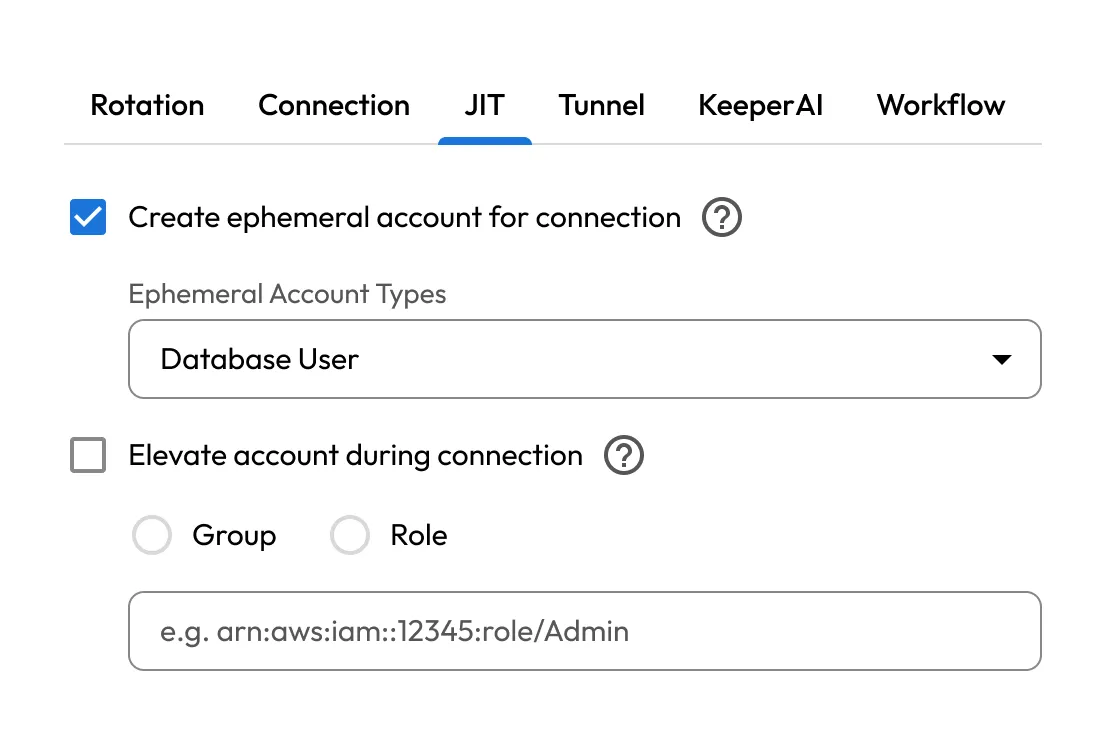
KeeperPAM enforces zero-trust access controls across every database connection. Access is provisioned through role-based policies and protected with Multi-Factor Authentication (MFA). Just-In-Time (JIT) access eliminates standing privileges, ensuring users receive database access only when approved and only for a defined duration.
KeeperPAM replaces VPN-dependent access with a lightweight Keeper Gateway that establishes end-to-end encrypted connections to any target database. No inbound firewall rules are required - the gateway securely brokers access between the Vault user and the target database, reducing the attack surface while maintaining performance and scalability across cloud and on-premises environments.
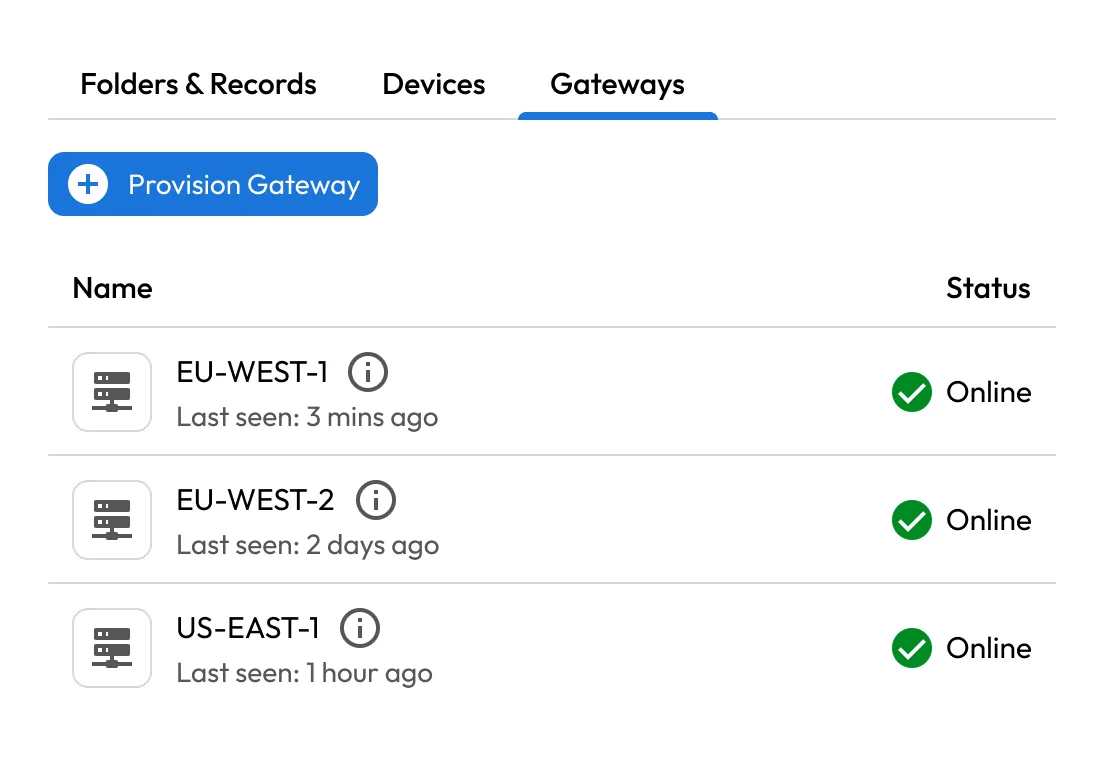
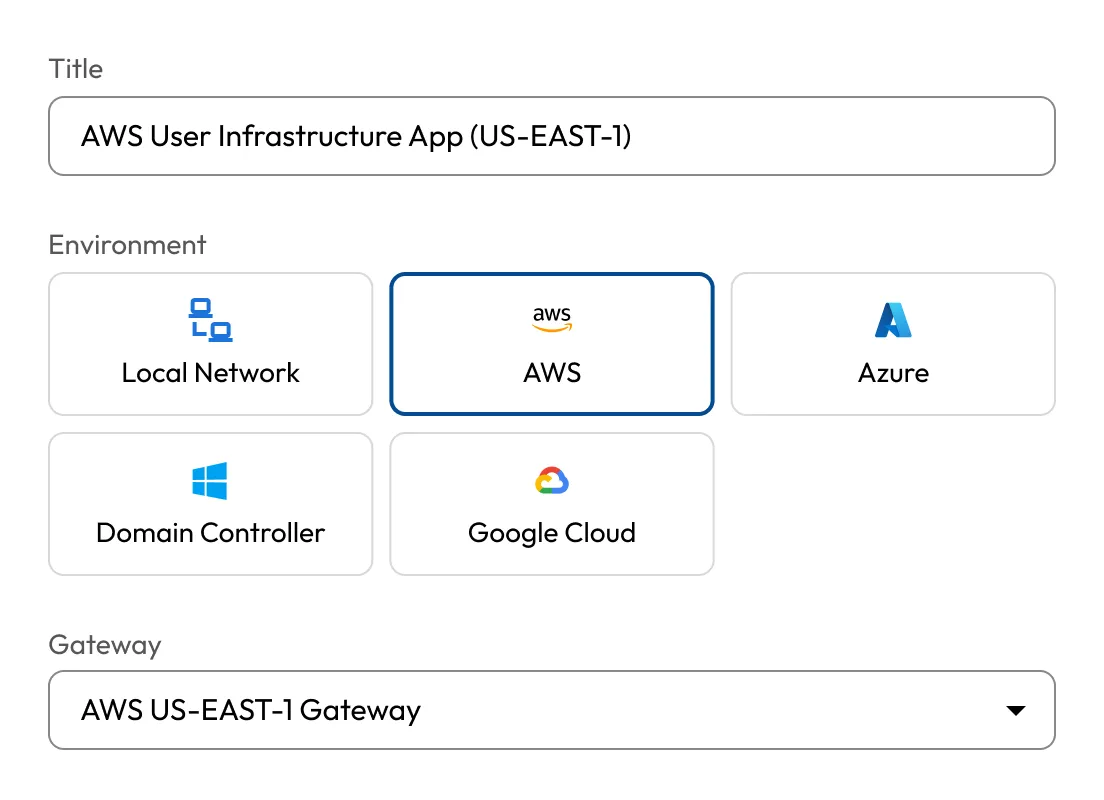
KeeperPAM brings database access under centralized management, enforcing policy from a single cloud-native platform. Rather than relying on standing credentials and access scattered across teams, security administrators grant just-in-time access to databases, reducing standing privilege and giving full visibility into who can reach which databases and when.
KeeperPAM provides comprehensive session management with encrypted session recording and detailed audit logs. Organizations can monitor remote database activity, review privileged sessions and integrate event data into SIEM platforms to detect threats and support compliance initiatives. KeeperAI enables high-risk sessions to be terminated automatically.
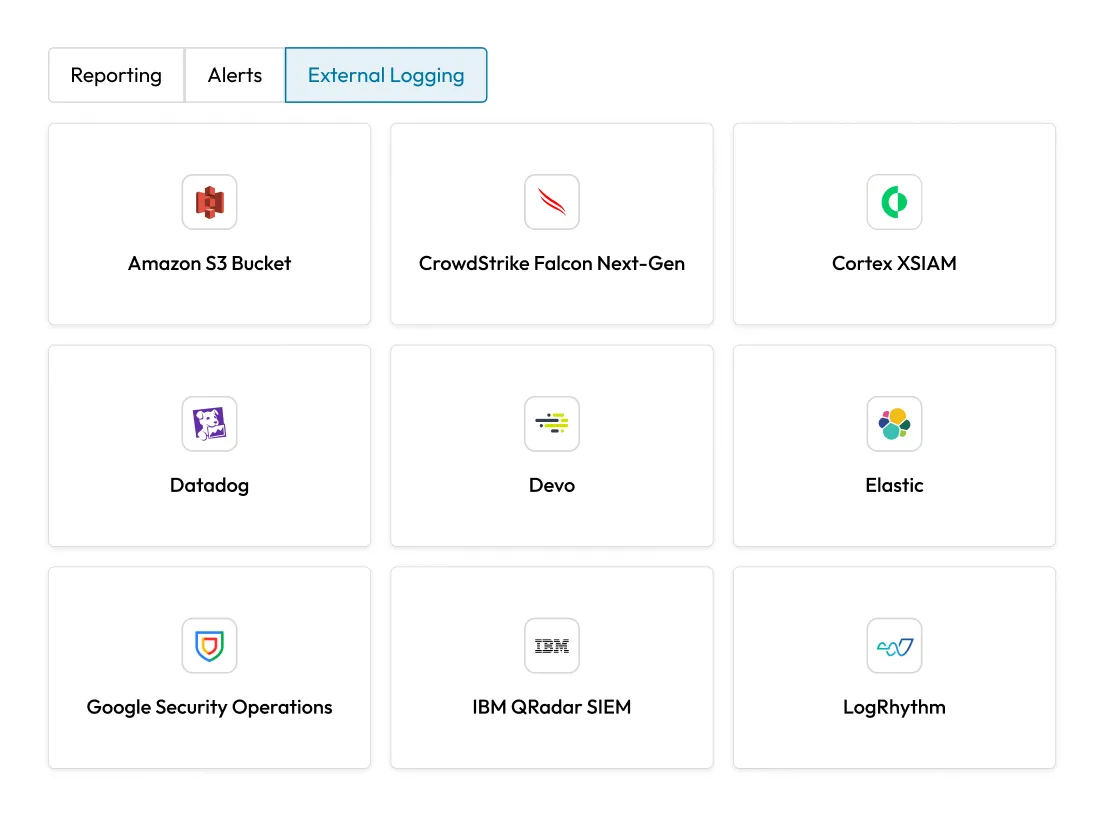
By centralizing authentication, authorization and session visibility, KeeperPAM streamlines regulatory compliance. Detailed reporting and audit trails help organizations demonstrate control over privileged database access while maintaining a zero-knowledge security architecture.
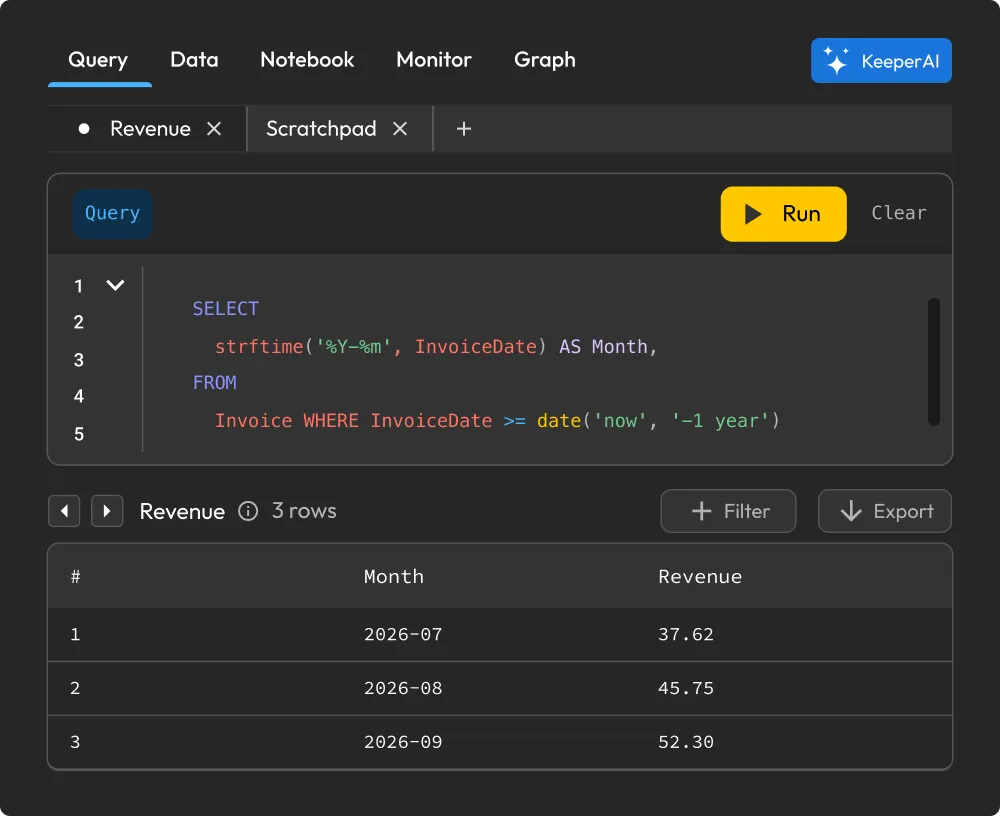
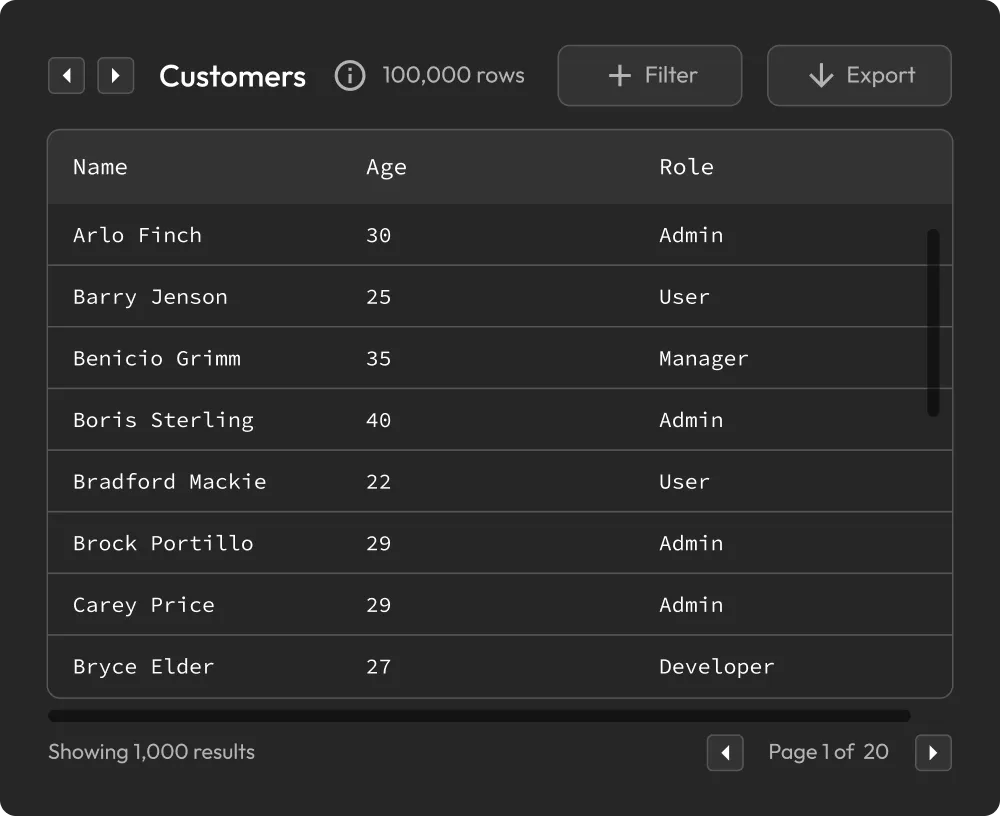
Launch a fully embedded, zero-trust database front-end with KeeperDB, purpose-built to replace legacy database tools.
KeeperDB enables privileged users to securely access, query and manage databases directly from the vault – without exposing credentials or relying on traditional client applications. Every session is fully recorded, and all queries are logged to deliver complete visibility, auditability and control.
With one click from the vault, users start an end-to-end encrypted local tunnel to the target database through the Keeper Gateway, then connect their database tool locally. Credentials never land on the user's device and access can be time-limited and policy-driven. Sessions are fully recorded and queries are logged for complete visibility and auditability.
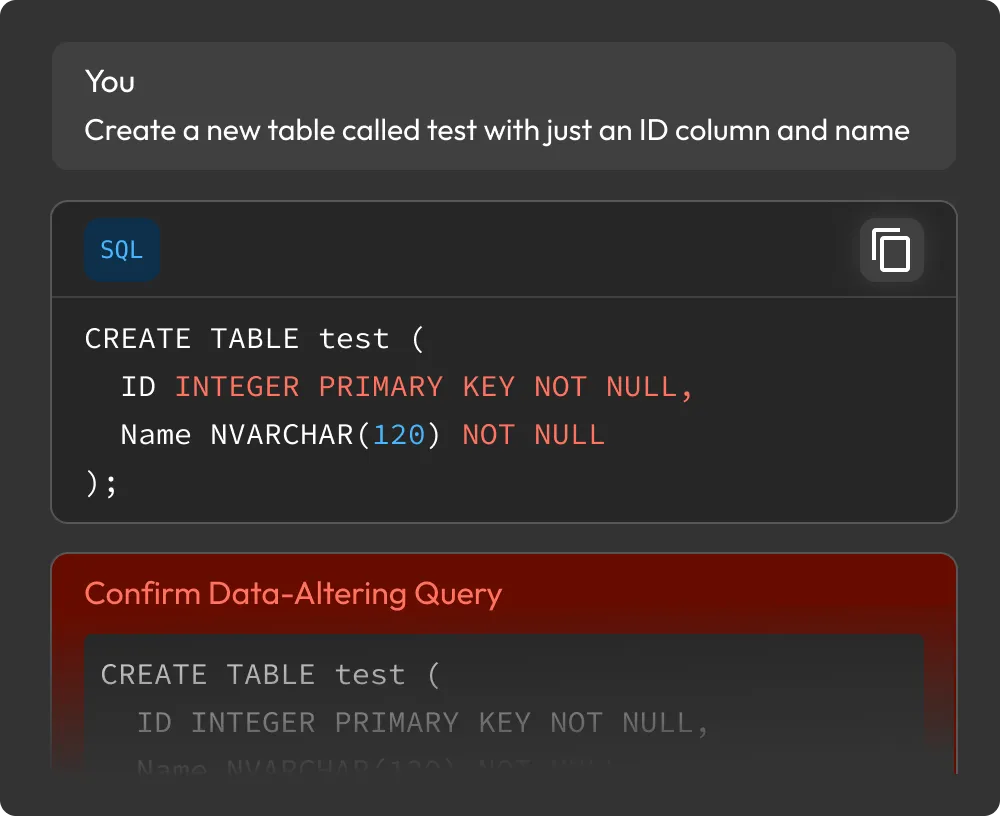
Ask for data in plain English and let KeeperAI write and run the SQL, directly inside the vault session. Read-only queries can run on their own when policy allows; anything that changes data waits for your approval, and the Keeper Gateway injects credentials at runtime so secrets never reach the user or the model. You also choose the model behind it: OpenAI, Anthropic, Google, Azure, Bedrock, Vertex or a self-hosted endpoint, and every query the AI generates is recorded and logged like any other session.
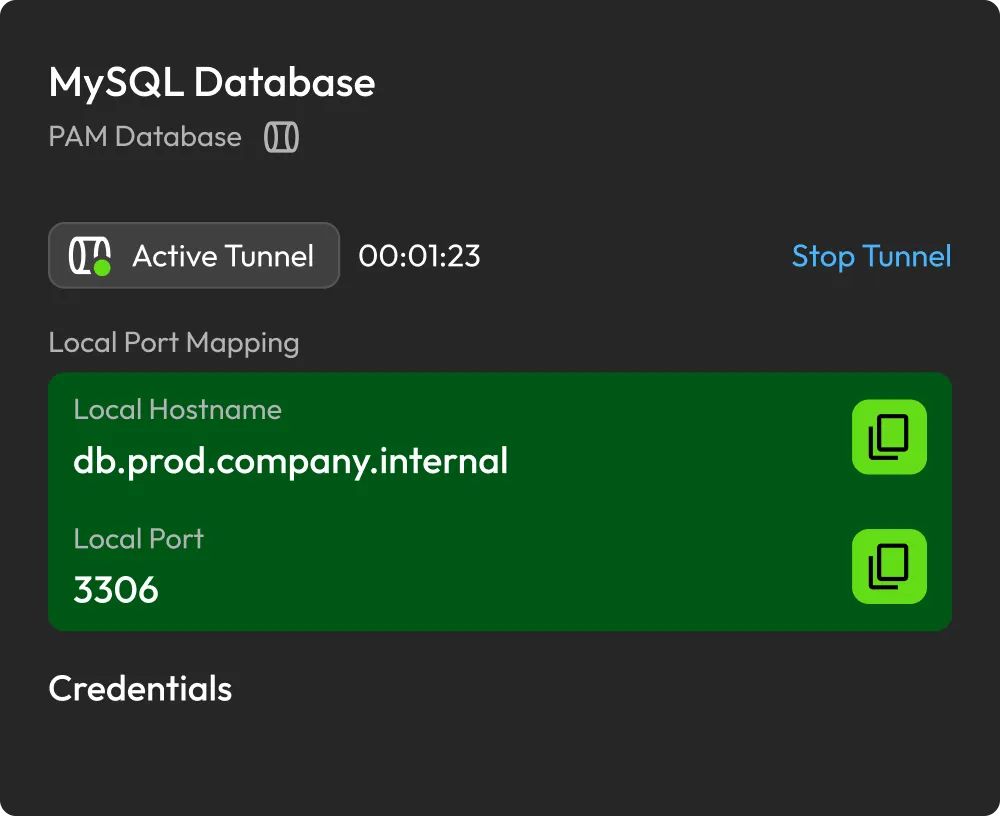
Start a local connection through the Keeper Gateway so native clients like MySQL Workbench, pgAdmin and SSMS connect to the endpoint while credentials remain protected in the Vault.
You must accept cookies to use Live Chat.