
 Cybersecurity



Malicious cyber activity targeted remote monitoring and control technology at over 30 community water systems across Minnesota in late July 2026, and water cyber attacks were
7 min read
Published on October 07, 2024
You can prevent Man-in-the-Middle (MITM) attacks in your organization by investing in a password manager, using a VPN, monitoring your network and training employees on security best practices. MITM attacks occur when a cybercriminal intercepts private data sent between two businesses or individuals to steal or alter the data with malicious intent.
Continue reading to learn what you can do to prevent MITM attacks from impacting your organization and how to protect your organization from these cyber attacks.
1. Use strong, unique passwords
With proper password hygiene practices, your organization can significantly reduce the chances of suffering from MITM and other cyber attacks by making it more difficult for cybercriminals to access employees’ accounts. Using strong and unique passwords is essential for your organizational data to be protected against any password-based cyber attack. Make sure your employees use passwords that consist of at least 16 characters, with a combination of uppercase and lowercase letters, numbers and symbols. The stronger your employees’ passwords are, the lower the risks are of your organization becoming the victim of a MITM attack.
2. Enforce the use of MFA
While Multi-Factor Authentication (MFA) won’t completely prevent MITM attacks from happening, it can reduce the risk of a cybercrimimal gaining access to an employee’s account. MFA is essential in minimizing the chances of MITM attacks occurring because the additional form of authentication stops cybercriminals from accessing your organization’s accounts. You should require employees to enable MFA on their organizational accounts to protect your organization from cyber threats. That way, even if a cybercriminal intercepts an employee’s login credentials during a MITM attack, they cannot access your organization’s data if MFA is enabled. By enforcing MFA in the workplace, a cybercriminal who has stolen employees’ passwords in a MITM attack cannot access any account without the additional form of verification.
3. Use a VPN or VPN alternative
Your organization should use a Virtual Private Network (VPN) because it can protect your network from being intercepted by cybercriminals attempting to steal your data. By using a VPN within your organization, your employees will be protected against MITM attacks, as unauthorized users will not be able to access your network.
Another alternative to using a VPN is a Zero Trust Network Access (ZTNA) service. ZTNA is a security framework that manages strict access controls no matter which network a device is connected to. ZTNA services provide a more user-friendly experience than VPNs because they allow users to access specific resources directly, without requiring a full network connection. ZTNA services provide enhanced security by verifying that a user is who they say they are, so the risk of unauthorized access is significantly reduced. ZTNA services ensure that your organization has greater visibility into what authorized users are doing and your network’s traffic, which means you can respond to security threats like MITM attacks in real time.
4. Implement end-to-end encryption
To prevent your organization from being victimized by MITM attacks, you should implement end-to-end encryption. This kind of encryption protects the data on your device and decrypts it only on the recipient’s device, preventing a cybercriminal from intercepting the message. Having your organization’s messages and data encrypted ensures that only authorized users can access and read any private information, thereby stopping MITM attacks.
5. Keep hardware and software up to date
How often do you see an employee using a computer from two decades ago with software that’s about 10 versions older than the newest one? You don’t, because outdated hardware and software are unsafe and make you vulnerable to cyber attacks. Your organization should have employees use the latest hardware to improve productivity, load data faster, experience fewer crashes and have the latest security features already built into their devices. Employees should always install the latest software updates to improve their device’s overall performance, fix bugs and patch security flaws. If your organization’s devices are outdated and not running the most recent software updates, you could risk your data being intercepted in MITM attacks due to security vulnerabilities.
6. Continuously monitor your network
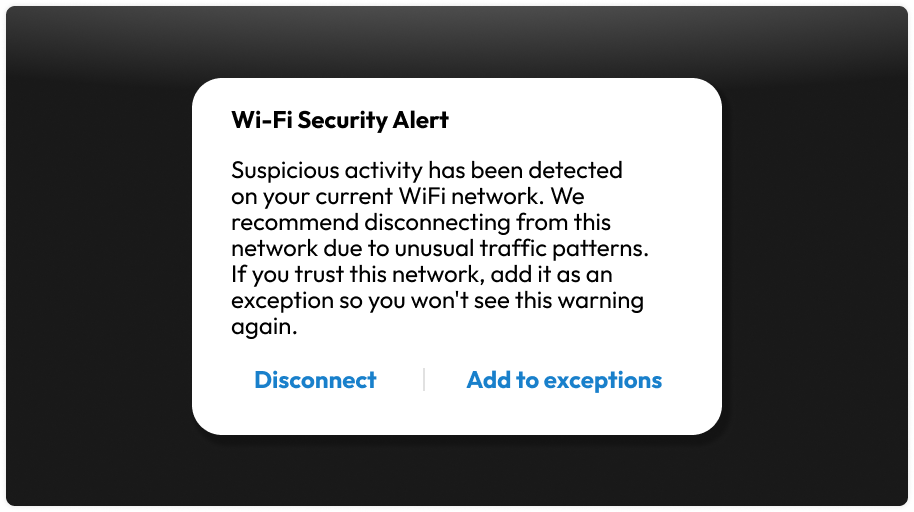
Make sure your organization’s network is monitored regularly to identify any suspicious activity and prevent MITM attacks. If you consistently monitor your network, you will be able to notice any strange activity that may be the sign of a cyber attack. When you have records of typical network activity, you can compare them to potential cyber threats and can even use them to determine the source of a MITM attack. There are many tools that your organization can use to monitor your network, and you should use one that provides real-time updates about any irregular traffic patterns or excessive bandwidth usage.
7. Adopt a zero-trust framework
A zero-trust security framework requires all employees and organization-approved devices to be validated at all times, with access granted based on their role. With the assumption that any organization or individual could suffer a data breach, a zero-trust framework requires every employee and device to be allowed onto the network only after verifying their identity. Having this type of security framework in place will significantly reduce the risk of being impacted by password-related and MITM attacks. KeeperPAM offers a zero-trust, zero-knowledge solution to protect your organization’s most sensitive data and help you manage your employees’ access controls. By using a solution with a zero-trust framework, you can minimize the chances of a cybercriminal intercepting your organization’s data through MITM attacks.
8. Train employees on security awareness
A crucial way to prevent your organization from being impacted by MITM attacks is to make your employees aware of cybersecurity threats. Provide regular training for your employees to learn about relevant security topics, such as spotting phishing attempts and avoiding public WiFi. Other important topics to cover include best practices for using social media, how to protect mobile devices and the different ways malware can steal company data. It’s essential that all employees understand how to protect themselves and your organization’s data from cybercriminals to prevent MITM and other cyber attacks.
Keep your organization protected from man-in-the-middle attacks
Considering how harmful MITM attacks can be to your organization, it is important to do everything possible to keep your organization and employees safe from these and other types of cyber attacks. One of the easiest ways to protect your organization from MITM attacks is by investing in a password management software for business like Keeper. When your organization uses Keeper Business, each employee will have their own digital vault where they can create and store strong passwords and other private information. With a solid foundation of strong password hygiene within your organization, MITM attacks will be much more difficult for cybercriminals to execute.
Sign up for a 14-day free Keeper Business trial today to develop secure password management for your organization and protect your employees’ data from being intercepted by cybercriminals.

