
 Cybersecurity



Malicious cyber activity targeted remote monitoring and control technology at over 30 community water systems across Minnesota in late July 2026, and water cyber attacks were
6 min read
Published on August 15, 2024
E-gift cards can be safe to buy; however, there are some risks you should consider before purchasing them. Some cybercriminals will buy e-gift cards with stolen payment information and then resell them to others for a profit. Because e-gift cards require little to no personal information, cybercriminals can get away with scamming people with e-gift cards.
Continue reading to learn more about the risks of using e-gift cards and how you can avoid being scammed.
Physical gift cards vs e-gift cards: Which is safer?
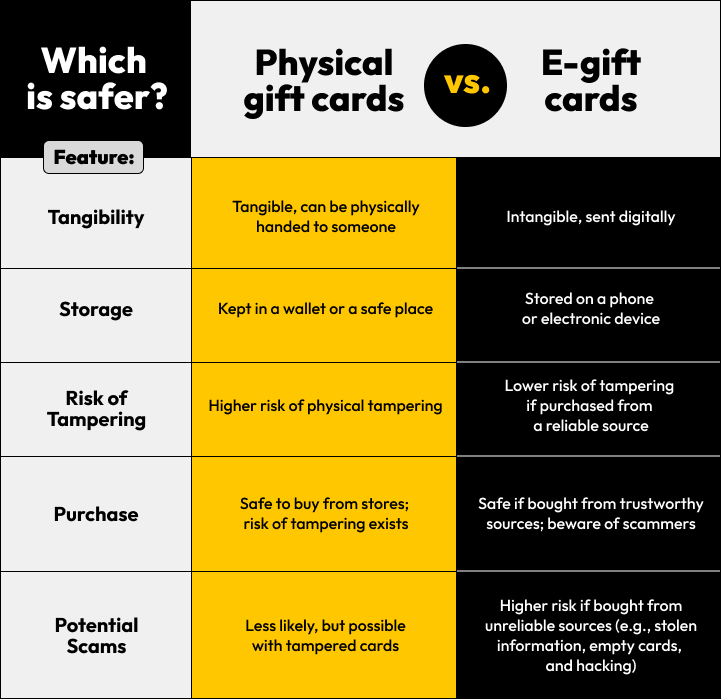
The main difference between physical gift cards and e-gift cards is their tangibility. A physical gift card can be handed from one person to another, while an e-gift card can be sent digitally to its recipient to use online. Physical gift cards must be kept in your wallet or somewhere safe, while e-gift cards can be kept on your phone or electronic device in a folder or mobile wallet. Although buying physical gift cards carries the risk of tampering, e-gift cards are only safe to purchase from reliable and trustworthy sources. Otherwise, scammers could steal your private information, the cards might have no money on them or they could even be hacked.
E-gift card security risks
Before purchasing an e-gift card, here are some of the most important security risks you should know about.
Scammers sell fake e-gift cards
If you purchase an e-gift card from an illegitimate website, you might accidentally purchase an e-gift card from a scammer who will steal your personal information and money. Scammers sell fake e-gift cards on websites that are designed to look reputable but aren’t, and when you fill out your information to complete your purchase, that personal information goes to a scammer who could use your information to access your accounts. Not only will you not get a real e-gift card, but you will also lose your money and potentially have your private information stolen in this kind of phishing attack.
Stolen e-gift cards
E-gift cards are delivered through email or text, so there is always a chance they could be stolen. Since emails and text messages are unencrypted, a cybercriminal could intercept a message and steal an e-gift card. This could also happen if you take a long time to use your e-gift card. If a cybercriminal gains access to your email account and finds the message containing an e-gift card, they could use the card before you have a chance to.
E-gift card hacking
Recently, cybercriminals have been using bots to test thousands of e-gift card numbers and activation codes to hack valid e-gift cards. Since bots can be assigned large amounts of tasks, cybercriminals rely on their fast and effective nature to try different combinations of numbers and codes.
Sending an e-gift card to the wrong recipient
Since e-gift cards are sent digitally, they could potentially be sent to the wrong person if the sender isn’t careful. Anyone who receives an e-gift card accidentally can either delete it or use it for themselves, which makes the purchase a waste since your intended recipient has not received the e-gift card. The wrong recipient would also know your email address, which could lead them to learn other private information if the recipient has malicious intentions.
How to avoid e-gift card risks
Luckily, there are a few simple things you can do to avoid security risks associated with e-gift cards.
Purchase e-gift cards from reputable sellers
One of the most important things to remember when purchasing e-gift cards is that you should only buy them from reputable sellers. Trustworthy sellers, like Amazon or Target, ensure that your e-gift card is legitimate and not tampered with. You can tell if a seller is reputable by making sure their website is legitimate, has trustworthy reviews and maintains a positive reputation. Buying from reputable sellers is crucial because many people buy e-gift cards from online marketplaces like Facebook or eBay, which are filled with scammers who will send invalid e-gift cards after taking your money.
Ensure you have the correct contact information
To avoid sending an e-gift card to the wrong person, double-check that you have the right contact information for your intended recipient before sending it. Someone may have changed their phone number or could be using a different email address than the one you have saved for them, so make sure you have the correct information.
If you’re a recipient, secure your email account
You should maintain a secure email account for many reasons, including to prevent e-gift cards from being stolen from your inbox. Because emails can be intercepted and your email account could be hacked, make sure to use a strong and unique password for your email account to make it more difficult for a cybercriminal to crack. An additional way to secure your email account is by enabling Two-Factor Authentication (2FA) for additional security which requires anyone trying to access your account to provide extra verification of your identity. This will not only protect the rest of your emails and account but also ensure that your e-gift cards are not stolen due to weak passwords or lack of security.
Use an e-gift card you receive immediately
After you’ve received an e-gift card, it’s best to use the e-gift card right away. Instead of waiting for a special occasion or potentially forgetting that you have an e-gift card, using it right away ensures that a cybercriminal doesn’t intercept it through an unencrypted email or text message. It’s helpful to add a new e-gift card to your digital wallet or online account with the associated vendor to ensure you use your gift card.
Buy and use e-gift cards safely
You can buy and use e-gift cards safely by avoiding phishing scams, being cautious about purchasing them only from trustworthy sources and validating correct contact information.

