
 MSP
MSP 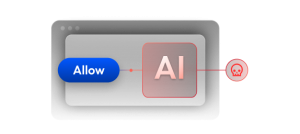

MSPs rarely inherit a clean slate. Whether onboarding a new client or expanding services within an existing account, providers often step into environments shaped by years
MSPs are expected to understand their clients’ technology environments. They know which endpoints are managed, which applications are business-critical, which systems require patching or maintenance, where sensitive data resides and who has access to it. Increasingly, however, critical technology decisions are now being made without IT or MSP involvement.
Across client environments, this can take many forms:
- A marketing team uses an AI design platform to create campaign visuals
- A sales rep connects an AI assistant to a CRM to summarize customer interactions
- An HR manager uploads a résumé to a public chatbot for evaluation
- A developer uses an AI coding tool to troubleshoot company source code
And each instance can occur without the MSP ever knowing.
That doesn’t necessarily mean clients are deliberately withholding information. The issue is that AI use has become highly decentralized in practice. Employees and individual departments can access powerful tools with little more than a browser, credit card or OAuth approval in what is known as shadow AI, allowing new technology to enter an organization before IT teams or service providers are even aware of it, let alone able to fully evaluate it.
For MSPs, that creates an immediate problem: You can’t effectively protect an environment you can’t see – and you can’t defend what you don’t know exists.
How shadow AI creates security risks for MSPs
Shadow IT has challenged organizations for years as employees continue to adopt technology outside approved IT channels. Shadow AI, however, escalates the potential exposure. These applications don’t simply sit alongside business systems; they can interact with sensitive company data, connect to existing platforms beyond their initial scope and execute tasks with increasing autonomy.
Recent research shows just how widespread this behavior has become. KPMG’s 2025 Shadow AI report found that 44% of U.S. employees surveyed knowingly used AI in ways that violated their organization’s policies or guidelines. The motivation isn’t necessarily malicious; it’s often driven by convenience, speed and efficiency. Today’s work culture increasingly rewards those same qualities, encouraging employees to automate repetitive tasks and adopt tools they believe will help them perform better.
But the drive for greater efficiency doesn’t eliminate risk.
For MSPs, the real concern is what each unrecognized application adds to the environment: another set of connections, permissions and potential access pathways operating outside established oversight.
The hidden access and permissions behind AI tools
The security implications of AI use aren’t always obvious to the person adopting the technology. What looks like a simple connection can introduce permissions and access that extend well beyond the immediate task.
Consider what happens when an employee connects an AI application to a business platform.
To the user, the process may be as simple as clicking the “Allow” button. Behind that approval can be a series of permissions to retrieve files, access contacts, interact with customer information or connect with other applications.
Those connections can persist beyond the initial interaction, creating access the MSP may not know exists. While the MSP may still manage the endpoint, secure the user’s account and protect the underlying business application, it may not know about the connection sitting between them.
That’s where AI begins to reshape the traditional concept of shadow IT. The unknown is no longer which application is being used. MSPs also need to understand what information an AI service can reach, the exact permissions it has been granted, which credentials support it and whether that access is still necessary.
The consequences of this oversight gap are already emerging. IBM’s 2025 Cost of a Data Breach Report found that 63% of breached organizations surveyed either lacked an AI governance policy or were still developing one. Among those with policies in place, only 34% regularly audited for unsanctioned AI use. Organizations with high levels of shadow AI also incurred breach costs $670,000 higher on average than those with minimal or no unsanctioned AI use.
Why MSPs need visibility into AI access
For MSPs, the priority isn’t controlling whether clients use AI but understanding how that use changes the environment they’re responsible for securing.
Teams are adopting these applications because they solve real problems and simplify time-consuming tasks. At the organizational level, there are equally strong incentives to explore technologies that enhance productivity.
A more effective response starts by reframing the questions that MSPs ask.
Documenting which AI applications a client has formally approved is a good starting point, but it only tells part of the story. MSPs need visibility into:
- Which AI services employees are actually using
- Which business applications and data those services can reach
- Which OAuth permissions have been granted
- Which API keys or service accounts enable those connections
- What actions those tools are authorized to take once connected
Most importantly, how far does that access extend, and does it exceed what’s actually required?
These questions shift the discussion from defining policy to assessing practical risk. Even approved AI use can create gaps:
- An AI assistant connected to a CRM may be granted access to customer records beyond what it needs to perform its intended task.
- The same AI service may be restricted to approved data sources for one department but granted broader access by another.
- Access granted for a temporary project may remain active long after the work ends.
Approval alone doesn’t guarantee appropriate access.
Keeping pace with these changes requires more than a one-time inventory exercise. New applications appear constantly, existing SaaS vendors continue to add AI capabilities while autonomous agents perform tasks that, until recently, required direct human involvement. Monitoring this activity should be standard practice in MSP security reviews and ongoing client conversations.
The industry’s growing focus on AI discovery reflects the urgency of that need. Dedicated security capabilities are increasingly emerging to identify generative AI applications used without IT approval, analyze usage patterns, assess application risk and monitor potential data exposure. For smaller organizations without comparable resources in-house, this creates an area where MSPs can provide valuable visibility and guidance. AI discovery is quickly becoming an essential part of maintaining visibility across client environments.
Administrators can review usage patterns, identify unsanctioned applications, assess application risk, evaluate access permissions and monitor potential data exposure. These capabilities can reveal AI activity that might otherwise remain outside traditional IT oversight.
For MSPs, AI discovery is quickly becoming an essential part of maintaining visibility across client environments.
How MSPs can improve AI governance with clients
For most organizations, closing this gap isn’t simply a technical challenge; it’s a communication challenge.
The disconnect often widens when employees don’t recognize which AI-related decisions carry security implications or warrant MSP involvement. What may initially appear to be a simple application, integration or departmental purchase can introduce new permissions, credentials and access requirements that extend well beyond its intended use.
For MSPs, stronger AI governance starts with setting clear expectations around when and how clients communicate AI-related changes. Those conversations should address questions such as:
- Which new AI tools are teams experimenting with, and are they approved for business use?
- Have any departments connected AI tools directly to sensitive systems or business-critical applications?
- What company, customer or other sensitive data is being shared with these tools, and where does that data go once submitted?
- Who owns each AI integration and is responsible for managing its access over time?
- Have permissions expanded or changed since the tool was introduced?
- Are previously approved integrations still necessary, or does access remain after the original business need has ended?
By initiating these discussions and keeping them active as client environments change, MSPs can surface AI activity before it adds another unmanaged layer to the environment. More importantly, MSPs can enable clients to move quickly with AI without letting access, permissions and oversight fall behind.
The goal is simple: MSPs need real-time visibility into AI deployments before those tools access company data or systems.
How MSPs can secure AI access across client environments
Discovering previously unknown AI use solves only part of the problem. Once that activity comes into view, MSPs need a consistent way to bring it under control across every client environment.
AI assistants, integrations and agents ultimately depend on credentials, permissions and connections to business systems. Those pathways must be protected, privileges limited to what’s necessary and permissions adjusted as requirements change. For MSPs operating at scale, the challenge is applying those principles consistently across multiple clients as their environments evolve.
Keeper provides MSPs with a unified platform to do exactly that. By consolidating credential security, privileged access, secrets management and endpoint privilege management within a zero-trust, zero-knowledge architecture, Keeper helps MSPs govern human and machine identities at scale without introducing another disconnected layer into the security stack.
The most consequential AI risk may not come from the applications an MSP already manages.
It may come from the ones no one thought to mention.
Discover the Keeper MSP Partner Program and see how Keeper equips MSPs to close AI visibility gaps across client environments.

