
 Cybersecurity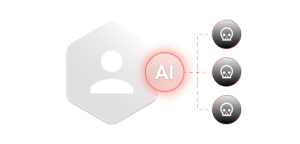


Malicious cyber activity targeted remote monitoring and control technology at over 30 community water systems across Minnesota in late July 2026, and water cyber attacks were
Employees are adopting AI tools, agents and automations faster than organizations can govern them. The real danger emerges when these tools connect directly to internal systems and sensitive data in the name of enhancing productivity. Among employees who use AI at work, a significant share do so without formal approval from IT or security teams, which is commonly called shadow AI.
Many organizations still treat shadow AI as a data exposure problem, while it is really becoming an identity governance issue. Every unsanctioned AI integration silently creates new accounts, credentials and identities that operate beyond traditional access controls. Organizations must extend identity-first security controls across every human and Non-Human Identity (NHI) connected to their systems to regain visibility, enforce governance and reduce overall security risks.
What shadow AI actually creates
Shadow AI spreads quickly because modern AI tools require little to no setup. Employees can connect applications, automate workflows and process data almost instantly without involving IT. The tools themselves are rarely the problem. The risk comes from what employees connect them to. Once AI platforms gain access to SaaS platforms, cloud environments and internal databases, they introduce credentials and identities that most security teams don’t know exist and have no framework to govern.
Every unsanctioned AI integration creates new identities and credentials that no one is auditing. Each one adds to a growing inventory of accounts, access points and secrets that IT never provisioned and therefore cannot revoke. When employees create accounts for AI tools, they create identities with their own access scope, data permissions and session histories. These multiply quickly. IT ends up with an invisible cluster of unmanaged identities spread across external platforms, no visibility into what they can access, no way to audit usage and no deprovisioning process when the employee moves on.
When employees go further and connect AI tools to internal systems, they introduce service accounts into organizational environments. These NHIs typically operate entirely outside lifecycle management, credential rotation and access governance. And every integration generates credentials such as API keys, tokens and secrets, that often end up stored in browser extensions or configuration files outside the security perimeter. These credentials are rarely rotated and almost never audited.
The identity governance gap this creates
Traditional identity security was built for human users, IT-provisioned access and defined network perimeters. Shadow AI undermines all three assumptions simultaneously.
In many enterprise environments, NHIs already outnumber human identities. AI agents with access to a production database represent the same level of privileged access risk as a human administrator with equivalent permissions, but they’re often provisioned without the same scrutiny, monitored without the same consistency and deprovisioned without the same process.
Our own research reinforces this. Keeper Security’s Identity Security at Machine Speed report found that 43% of cybersecurity decision-makers globally identify AI-related NHI management as a top gap in their identity governance programs. The organizations that recognize this gap are ahead of the ones that haven’t looked yet.
What organizations need to do differently
The response to shadow AI isn’t stricter policies or broader bans. It’s extending identity-first security controls to account for every identity AI tools create, both human and machine, and making governance continuous rather than periodic.
Gain full visibility over AI usage
Organizations cannot govern what they cannot see; they must continuously discover every sanctioned and unsanctioned AI tool, agent, automation and integration operating across their environments. By monitoring their networks, organizations can track application usage and develop controls to limit unapproved AI tools while identifying every NHI those tools create that was never originally provisioned through IT. Beyond discovery, organizations must implement real-time privileged session monitoring and recording to maintain full visibility over AI-driven workflows for continuous audits rather than periodic, retrospective reviews.
Apply identity security to both humans and machines
Every NHI should be subject to the same authentication, authorization and lifecycle management as a human identity with least-privilege access, automated credential rotation and defined deprovisioning tied to the lifecycle of the associated human owner or workload. The same controls that apply to privileged human accounts must also apply to the AI agents and service accounts operating alongside them.
Give employees a viable path
Employees who contribute to shadow AI often do so not because they’re circumventing security but because they don’t know a governed alternative exists. Clear guidance on which tools are approved, for what use cases and under what conditions, and combined with accessible, approved alternatives, addresses the root cause rather than the symptom.
Enhance your identity security to manage shadow AI
Traditional security models were built for human users, IT-provisioned access and defined network boundaries. Shadow AI undermines those assumptions by introducing unmanaged machine identities, credentials and integrations across cloud and SaaS environments each time an employee connects an unapproved AI tool to infrastructure. Organizations that view shadow AI solely as a data leakage issue will miss the underlying danger: uncontrolled identity expansion. To manage shadow AI more effectively, organizations must have full visibility into AI-driven access, governance over both human and machine identities and automated controls for credentials and privileged access. To learn how organizations are adapting their identity security strategies for AI-driven environments, read our latest report.

