
 PAM
PAM 




Privileged Access Management (PAM) helps small businesses control, monitor and secure access to sensitive systems, administrator accounts and business-critical applications. It reduces the risk of credential
4 min read
Published on October 17, 2025
Privileged Access Management (PAM) is crucial for protecting an organization’s most critical systems and sensitive data against both internal and external cyber threats. Despite its importance, many IT and security teams perceive PAM implementation as challenging due to complexity, lack of resources or poor user adoption. While legacy PAM solutions have been known to be difficult to implement, modern solutions like KeeperPAM® are changing the process by making PAM more streamlined and scalable.
Continue reading to learn about the preconceived notions and difficulties of PAM implementation, how organizations can successfully implement PAM and the ways KeeperPAM can help.
Why PAM implementation can feel daunting
One of the main reasons organizations may feel intimidated about implementing a PAM solution is the absence of a clear strategy or roadmap. Often, IT teams rush to implement PAM without first identifying all privileged accounts or aligning with compliance requirements, leading to inconsistencies between PAM policies and business processes. If PAM disrupts established workflows or is rolled out without proper communication and training, it can face resistance from frontline users and cause frustration, reducing adoption and inciting pushback.
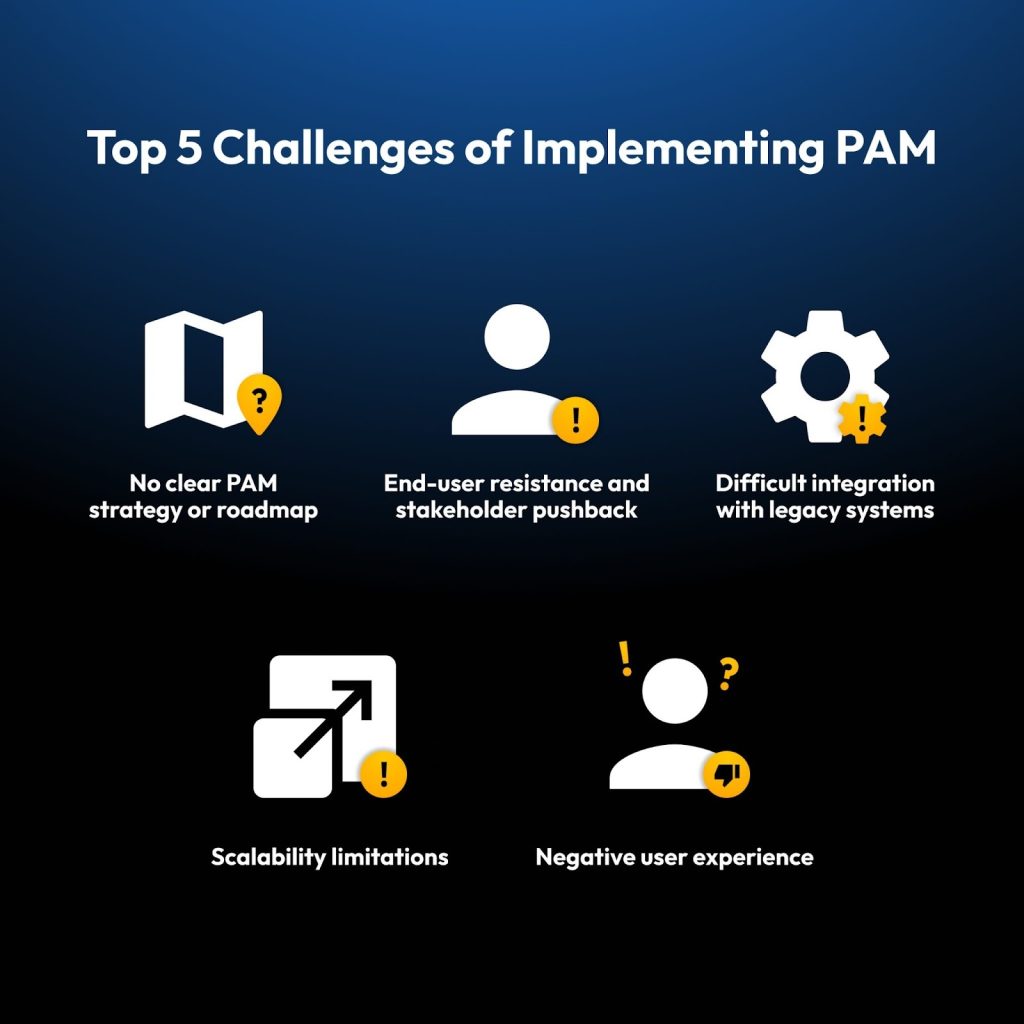
On the technical side, legacy PAM solutions are often complex and introduce integration challenges. They generally rely on agent-based deployments that don’t scale well, especially when integration with Security Information and Event Management (SIEM), Identity and Access Management (IAM) or IT Service Management (ITSM) systems is overlooked. This can slow progress and increase the burden on thinly stretched IT teams.
Additionally, some organizations only partially roll out PAM, failing to realize the full security benefits. For example, an organization may implement session recording or password vaulting but neglect credential rotation. Even if IT teams deploy PAM in its entirety, some organizations treat it as a one-and-done solution. However, without ongoing governance, access reviews and system updates, a PAM solution can become misaligned and introduce security gaps over time.
Is PAM truly that difficult to implement?
The belief that PAM is difficult to implement is not unfounded. According to Keeper Security’s Insight Report on PAM Deployment, 56% of surveyed IT leaders attempted to deploy a PAM solution but couldn’t fully implement it, with 92% of those respondents citing complexity as the primary obstacle. This represents a serious challenge, especially for enterprise organizations juggling multiple systems and legacy infrastructure.
However, the benefits of a successful PAM implementation greatly outweigh the common challenges. According to Keeper Security’s Insight Report on Securing Privileged Access, organizations that have deployed a PAM solution report nearly 50% fewer security incidents and a 53% improvement in sensitive data protection. These numbers demonstrate the value of implementing PAM correctly, not only for compliance but also for a better overall security posture.
Luckily, implementing a modern PAM solution isn’t as difficult as it once was. Cloud-native PAM solutions like KeeperPAM are designed to address the limitations of legacy PAM solutions with cloud-based architecture, seamless integrations and a simplified deployment process. With a modern solution, enterprises can step away from the weaknesses of legacy PAM solutions and move toward a streamlined, scalable way to manage privileged access.
How organizations successfully implement PAM
While there are many pitfalls in PAM implementation, organizations can successfully implement PAM by focusing on a strategic, phased approach. The most effective PAM implementations begin with assessing the current environment, identifying high-risk systems, mapping workflows and rolling out controls gradually. This strategy-driven approach allows IT teams to prioritize the protection of their most critical assets while building momentum. Starting with session monitoring before enforcing strict access policies gives teams the flexibility to adapt without disrupting business operations.
Just as important is strong change management to engage users early through trial programs. By having clear communication about PAM benefits and how its implementation will improve workflows, IT teams can build trust with all users and promote a smoother adoption across teams. In addition to reducing friction, implementing PAM should also reduce technical overhead by opting for a scalable, modern solution that is lightweight and integrates with SIEM, IAM and ITSM solutions. With continuous training, clear documentation and regular access reviews, organizations can reinforce best practices and keep their PAM solution aligned with their security needs. Rather than treating PAM as a one-time project, long-term success demands ongoing governance, audits and policy updates to prepare for various cyber threats and evolving security requirements.
Why KeeperPAM makes PAM implementation easier
For many organizations, the main challenges in implementing PAM lie in the complexity of managing, deploying and scaling. KeeperPAM is a modern, cloud-native PAM solution that’s both powerful and easy to implement, helping IT teams protect privileged access without friction. Here’s how KeeperPAM simplifies PAM implementation:
- Cloud-native, lightweight deployment: KeeperPAM eliminates the need for complex infrastructure changes, requiring only a lightweight gateway. Not having heavy agents or inbound firewall rules makes PAM rollout faster and less disruptive.
- Zero-trust, zero-knowledge architecture: KeeperPAM uses a zero-trust, zero-knowledge security model. This means all data is end-to-end encrypted, credentials are never exposed and users get secure access without unnecessary complexity.
- All-in-one PAM capabilities: Unlike most legacy tools, KeeperPAM combines secrets management, connection management, endpoint privilege management, password management, zero-trust access and Remote Browser Isolation (RBI) in a single interface.
- Proven ease and joy of use: KeeperPAM was recognized in the Gartner® Magic Quadrant™ for PAM, as well as a top-rated PAM solution in the 2025 Enterprise Management Associates (EMA) report for its ease of deployment, strong security and high user satisfaction.
- Scalable and seamless integration: Built for hybrid and cloud-first environments, KeeperPAM scales effortlessly while maintaining granular control. It integrates with existing SIEM, IAM and ITSM tools, helping teams streamline operations.
- Lower complexity and better coverage: With a unified vault, no reliance on VPNs and no need for heavy agents, KeeperPAM minimizes the attack surface and makes it easier and quicker to extend PAM coverage across all systems.
Say goodbye to PAM complexity with KeeperPAM
Even though PAM has traditionally been viewed as difficult to implement, modern solutions like KeeperPAM change that narrative by reducing complexity, streamlining the user experience and offering advanced security features in a unified platform. With KeeperPAM, organizations can protect privileged access without the common challenges of legacy PAM solutions.
Whether you’re investing in PAM for the first time or upgrading from a legacy solution, start your free trial of KeeperPAM to simplify access management without compromising security.

