

Akeyless
Rozwiązanie w postaci platformy
KeeperPAM® to platforma do zarządzania dostępem uprzywilejowanym oparta na architekturze natywnej dla chmury, która łączy zarządzanie hasłami w przedsiębiorstwie, zarządzanie tajnymi danymi, zarządzanie sesjami uprzywilejowanymi i zarządzanie uprawnieniami punktów końcowych w jednym interfejsie. To ujednolicona platforma bezpieczeństwa tożsamości, która zarządza dostępem dla ludzi, maszyn, nie-ludzkich tożsamości i agentów AI z poziomu tego samego sejfu Keeper Vault, a także zapewnia wykrywanie zagrożeń w czasie rzeczywistym z wykorzystaniem AI podczas każdej uprzywilejowanej sesji. Firma Keeper została wyróżniona w raporcie Gartner® Magic Quadrant™ 2025 w zakresie zarządzania dostępem uprzywilejowanym.
Na podstawie publicznie dostępnej dokumentacji Akeyless to platforma bezpieczeństwa tożsamości zbudowana głównie wokół tożsamości maszyn i zarządzania tajnymi danymi. Integruje zarządzanie tajnymi danymi, zarządzanie cyklem życia certyfikatów, zarządzanie kluczami i bezpieczny dostęp zdalny w ramach jednej płaszczyzny sterowania, kładąc duży nacisk na DevOps, infrastrukturę wielochmurową oraz tożsamości agentów AI.
Architektura i szyfrowanie
Keeper korzysta z architektury zero-knowledge i zero-trust. Wszystkie operacje szyfrowania i odszyfrowywania odbywają się po stronie klienta przy użyciu AES-256 z PBKDF2 oraz kryptografii krzywych eliptycznych (ECC). Serwery Keeper przechowują wyłącznie zaszyfrowane dane.
Keeper przechowuje zaszyfrowane dane poufne w swojej chmurze, a dostęp jest pośredniczony za pomocą lekkiej bramy Keeper Gateway, która wymaga jedynie połączenia wychodzącego przez port 443.
Firma Keeper wprowadziła również kryptografię odporną na ataki kwantowe jako dodatkową warstwę szyfrowania.
Akeyless korzysta z architektury bezsejfowej opartej na opatentowanej technologii Distributed Fragments Cryptography (DFC). Zamiast przechowywać pełny klucz szyfrowania, DFC dzieli materiał klucza na fragmenty rozproszone w różnych regionach i u różnych dostawców — pełny klucz nigdy nie jest składany w całość.
Dzięki opcjonalnemu fragmentowi przechowywanemu przez klienta Akeyless nie może odszyfrować tajnych danych klienta, osiągając model zero-knowledge. Akeyless oferuje również hybrydowe szyfrowanie postkwantowe.
Zarządzanie tajnymi danymi dla DevOps
Keeper Secrets Manager to w pełni chmurowe rozwiązanie zero-knowledge do zabezpieczania tajnych danych infrastruktury, w tym kluczy API, haseł do baz danych, certyfikatów i kluczy dostępu. Obsługuje statyczne i dynamiczne tajne dane, automatyczną rotację haseł oraz natywne integracje z GitHub Actions, GitLab, Jenkins, Kubernetes, Terraform, Ansible i Docker za pośrednictwem Commander CLI i pakietów SDK dla deweloperów.
Usługa Keeper Universal Secrets Sync automatycznie dystrybuuje zrotowane tajne dane do AWS Secrets Manager, Azure Key Vault i Google Cloud Secret Manager, aby wyeliminować rozbieżności danych uwierzytelniających.
Akeyless obsługuje statyczne, dynamiczne i krótkotrwałe tajne dane z automatyczną rotacją, dostępem Just-In-Time (JIT) oraz wstrzykiwaniem tajnych danych do potoków CI/CD i środowisk IDE. Narzędzie Universal Secrets Connector i podejście Multi-Vault Governance („Bring Your Own Vault”) tego rozwiązania umożliwiają zespołom zarządzanie zewnętrznymi magazynami tajnych danych, takimi jak HashiCorp Vault, AWS Secrets Manager i Azure Key Vault, z poziomu jednej płaszczyzny kontrolnej bez migracji przechowywanych w nich tajnych danych.
Dynamiczne tajne dane i brak stałych uprawnień
KeeperPAM obsługuje dynamiczną, efemeryczną aprowizację poświadczeń oraz dostęp JIT. Użytkownicy mogą otrzymywać tymczasowe poświadczenia z automatyczną rotacją po zakończeniu sesji, uzyskiwać dostęp do zasobów za pośrednictwem szablonów połączeń bez konieczności ujawniania danych uwierzytelniających lub korzystać z efemerycznej aprowizacji kont z dynamicznym podnoszeniem uprawnień ról.
Stałe uprawnienia są ograniczane dzięki ograniczonemu czasowo dostępowi oraz automatycznej rotacji po cofnięciu dostępu.
Akeyless generuje dynamiczne dane uwierzytelniające just-in-time, które istnieją wyłącznie przez czas trwania sesji i nigdy nie są przechowywane. Maszyny i obciążenia robocze uwierzytelniają się za pomocą swoich natywnych tożsamości chmurowych (ról AWS IAM, tożsamości zarządzanych Azure, kont usługowych GCP), co umożliwia dostęp bez użycia danych poufnych.
Zarządzanie i rejestrowanie sesji uprzywilejowanych
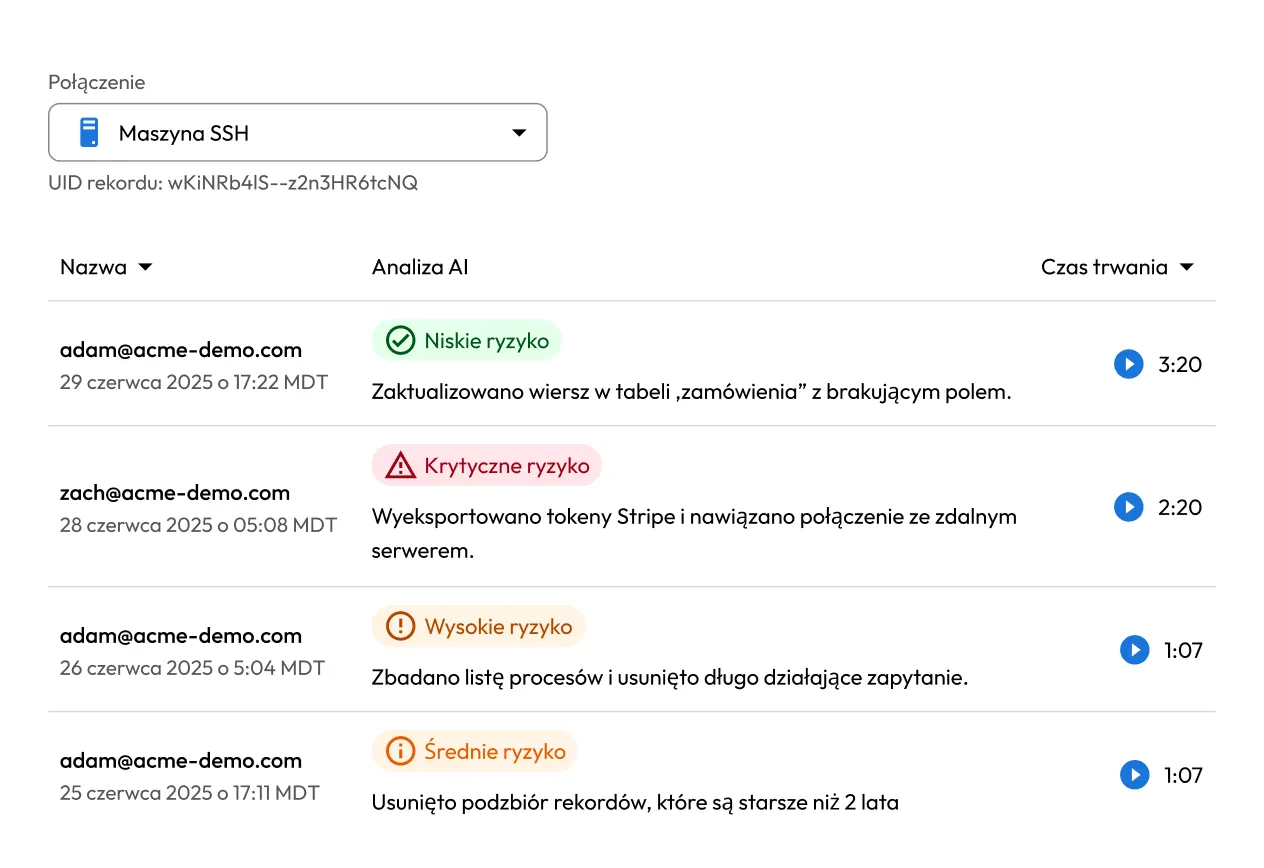
KeeperPAM zapewnia kompleksowe zarządzanie sesjami uprzywilejowanymi z bezpiecznym rejestrowaniem sesji metodą end-to-end dla sesji SSH, RDP, VNC, baz danych oraz zdalnych sesji przeglądarkowych. Nagrania są szyfrowane i odszyfrowywane lokalnie przy użyciu unikalnych kluczy dla każdej sesji.
KeeperAI® dodaje oparte na sztucznej inteligencji wykrywanie zagrożeń w czasie rzeczywistym, które analizuje aktywność sesji, klasyfikuje ryzyko i może automatycznie zakończyć sesję w przypadku wykrycia podejrzanej aktywności.
Akeyless zapewnia bezpieczny dostęp zdalny z dostępem bez hasła JIT do infrastruktury i rejestrowaniem aktywności sesji. Rozwiązanie to skupia się na dostępie do infrastruktury bez użycia poświadczeń, a nie na pełnym rejestrowaniu i odtwarzaniu sesji we wszystkich protokołach, co oznacza, że audyt może być bardziej problematyczny.
AI i wykrywanie zagrożeń
KeeperAI zapewnia natywne dla AI wykrywanie zagrożeń w czasie rzeczywistym podczas każdej sesji uprzywilejowanej, klasyfikując działania użytkowników według poziomu ryzyka i automatycznie kończąc sesje po wykryciu aktywności wysokiego ryzyka. Całe przetwarzanie odbywa się w środowisku klienta, a KeeperAI jest kompatybilny z każdym dostawcą LLM zgodnym z OpenAI.
KeeperPAM zarządza również dostępem dla nie-ludzkich tożsamości (NHI) i umożliwia organizacjom zabezpieczanie agentów AI za pośrednictwem ujednoliconej warstwy sterowania. Administratorzy uzyskują pełny wgląd w liczbę agentów AI w swoim środowisku oraz liczbę obciążeń roboczych wykonywanych przez każdego z nich.
Akeyless AI Agent Identity Security zabezpiecza autonomicznych agentów AI za pomocą dostępu bez poświadczeń, a Akeyless Jarvis / AI Insights zapewnia analizę tożsamości w języku naturalnym.
Akeyless koncentruje się w obszarze AI na zabezpieczaniu tożsamości maszyn i agentów oraz zarządzaniu nimi, a nie na wykrywaniu zagrożeń w sesjach w czasie rzeczywistym i automatycznym reagowaniu.
Zarządzanie certyfikatami i kluczami
Keeper koncentruje się na tajnych danych, hasłach i dostępie uprzywilejowanym. Certyfikaty mogą być przechowywane i zarządzane jako tajne dane w Keeper Secrets Manager, a Keeper integruje się z zewnętrznymi systemami KMS i PKI.
Akeyless automatyzuje wystawianie i odnawianie certyfikatów oraz PKI, a także zapewnia szyfrowanie jako usługę, tokenizację oraz wielochmurowy KMS z integracją z modułem HSM.
Zarządzanie hasłami przez ludzi
Zarządzanie hasłami jest fundamentalną funkcją rozwiązania Keeper. Oprócz przechowywania haseł, kluczy dostępu, kodów TOTP, bezpiecznych plików i rekordów niestandardowych z wykorzystaniem szyfrowania zero-knowledge, Keeper zapewnia bezpieczne udostępnianie haseł, szczegółową kontrolę dostępu opartą na rolach (RBAC), zasady wymuszania, szyfrowane udostępnianie rekordów i folderów, integrację z logowaniem jednokrotnym (SSO) z dowolnym dostawcą tożsamości SAML 2.0, aprowizację SCIM i Active Directory, monitorowanie dark webu BreachWatch® oraz Pulpit nawigacyjny zarządzania ryzykiem z raportowaniem zgodności i audytu.
Akeyless obejmuje zarządzanie hasłami dla przedsiębiorstw, które oferuje generowanie, przechowywanie i udostępnianie haseł oraz automatyczne wypełnianie w przeglądarce dla osób prywatnych i zespołów.
Model wdrożenia
KeeperPAM jest rozwiązaniem natywnym dla SaaS i w pełni opartym na chmurze, z usługami zaplecza hostowanymi w AWS, bez konieczności aprowizowania, skalowania ani utrzymywania infrastruktury przez klienta. Klienci wdrażają jedynie lekką bramę Keeper Gateway, która wymaga połączenia wychodzącego przez port 443, dzięki czemu wdrożenie przebiega błyskawicznie.
Akeyless to rozwiązanie natywne dla SaaS z bezstanową bramą wdrożoną w środowisku klienta, która komunikuje się wyłącznie w kierunku wychodzącym. Jego model bezsejfowy oznacza brak klastrów sejfów do aprowizacji, skalowania lub replikacji, co upraszcza wdrożenia wieloregionalne. Akeyless obsługuje środowiska hybrydowe i lokalne (on-prem) oraz nie jest dostępny jako rozwiązanie open-source dla zespołów wymagających pełnego samodzielnego hostowania lub przejrzystości kodu.
Certyfikaty zgodności
Keeper posiada certyfikaty SOC 2 Type II oraz ISO 27001/27017/27018, certyfikację FedRAMP High, autoryzację GovRAMP High, a także zapewnia zgodność z HIPAA, RODO, PCI DSS, FIPS 140-3 i ITAR. Certyfikacja FedRAMP High posiadana przez Keeper sprawia, że jest on jedną z najlepszych opcji dla organizacji federalnych i organizacji związanych z sektorem obronnym.
Akeyless posiada certyfikaty SOC 2 Type II, ISO 27001/27701, PCI DSS, HIPAA, DORA oraz FIPS 140-2. Akeyless nie posiada obecnie certyfikatu FedRAMP ani autoryzacji GovRAMP, co może mieć znaczenie dla instytucji rządowych USA i środowisk regulowanych.


